Winter heating bills are one of the biggest seasonal costs for most American households, and this year the picture is mixed. In its 2026-27 Winter Fuels Outlook, released on October 6, 2026, the U.S. Energy Information Administration expects households that heat mainly with natural gas or propane, about half of all homes, to spend less than last winter. By contrast, it expects homes that rely mostly on electricity or heating oil to spend more, with electric-heat bills forecast to rise about 4% and heating oil households to pay roughly 21% more. You can read the details in the EIA announcement.
You cannot control fuel prices, but you can control how much heat you waste. Here are 12 practical steps, from free habits to low-cost upgrades, that can help lower your bill. Savings vary by home, climate and fuel type, so treat these as ways to improve your odds rather than guarantees.
Free and almost free
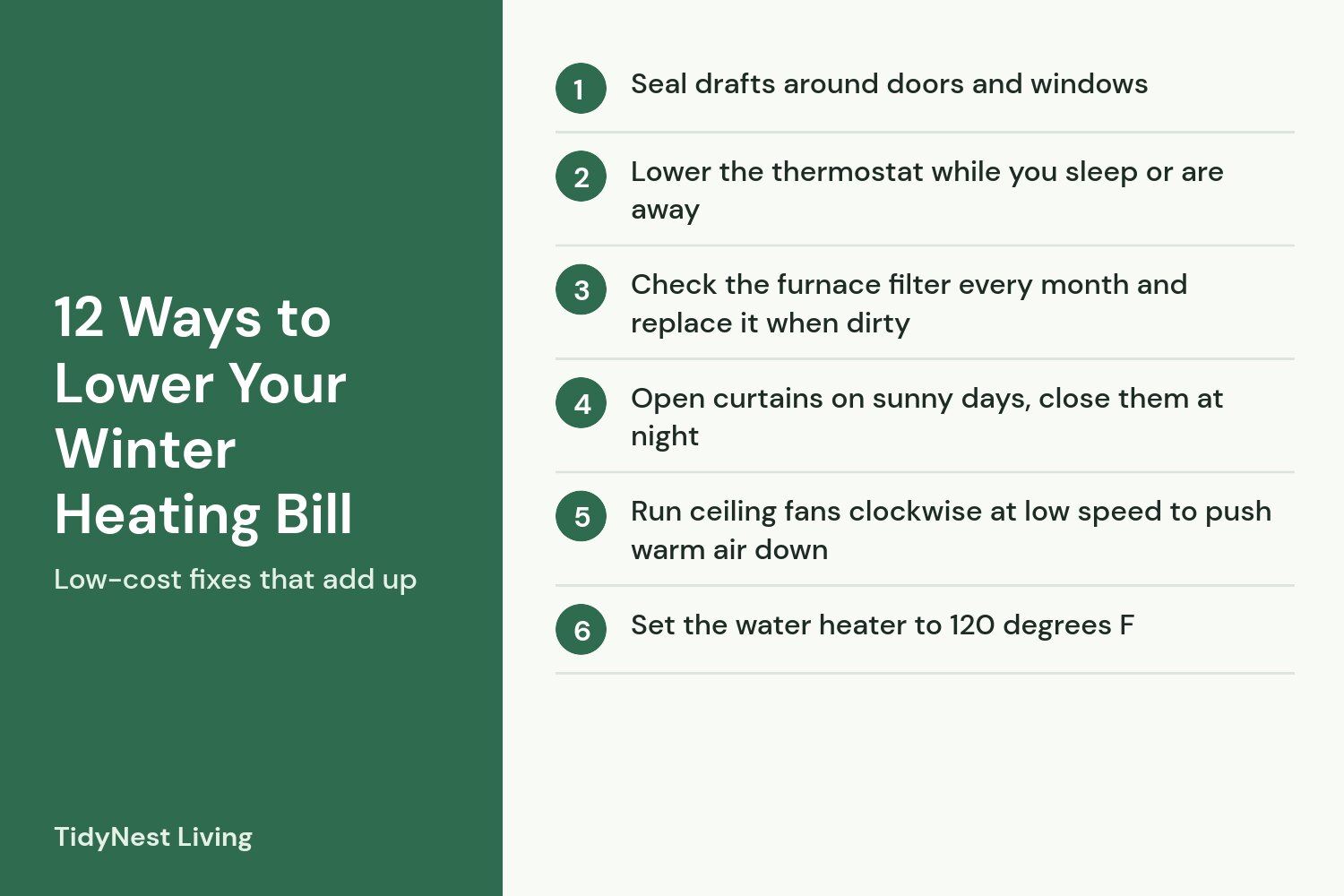
1. Lower the thermostat when you sleep or are away
The U.S. Department of Energy says turning your thermostat back about 7 to 10 degrees F for eight hours a day can save up to around 10% a year on heating and cooling. A smart or programmable thermostat can do this automatically, which is why it is a favorite upgrade.
2. Let the sun help
Open curtains on south-facing windows during sunny days to bring in free heat, then close them at dusk to hold warmth in.
3. Run ceiling fans clockwise at low speed
Most ceiling fans have a switch to reverse direction. In winter, a low clockwise spin gently pushes warm air that has risen back down into the room.
4. Close the fireplace damper and unused vents
An open damper lets warm air escape up the chimney. Close it when the fireplace is not in use. Do not close vents in a way that your heating system manufacturer advises against.
5. Use heat where you are
Heat the rooms you use. Closing doors to rooms you do not use can help, as long as your system still has proper airflow.
Low-cost fixes
6. Seal air leaks around doors and windows
Weatherstripping, door sweeps and caulk are inexpensive and effective. Hold a candle or an incense stick near the edges on a windy day and look for flickering smoke to find drafts.
7. Replace the furnace filter
A clogged filter makes your system work harder. Check it every month during heating season and replace it when it looks dirty, usually every one to three months.
8. Lower the water heater temperature
Setting your water heater to 120 degrees F is generally enough for household use and uses less energy than higher settings.
9. Insulate hot water pipes
Foam pipe sleeves are cheap and reduce heat loss between your water heater and the faucet.
10. Add window insulation
Heavy or thermal curtains and clear window film kits add a layer of insulation, which is especially helpful in older homes with single-pane windows.
Bigger upgrades worth considering
11. Service your heating system and seal ducts
A yearly tune-up helps your furnace or heat pump run efficiently. Leaky ducts can waste a lot of heated air, so sealing them can make a noticeable difference.
12. Improve attic insulation and ask about help
Heat rises, so a poorly insulated attic is a common source of loss. Ask your utility about low-cost energy audits and rebates. Programs such as the federal LIHEAP and weatherization assistance may help eligible households, and availability depends on your state, so check with your local agency.
A note on space heaters
Space heaters can make one room comfortable, but electric resistance heaters can be expensive to run if used for long periods. If you use one, plug it directly into a wall outlet, keep it at least three feet from anything that can burn, never leave it unattended, and choose a model with tip-over and overheat protection.
Quick comparison: where to start
- Under 10 minutes and free: thermostat setback, curtains, ceiling fan direction, fireplace damper.
- Under $50: weatherstripping, furnace filter, pipe insulation, window film.
- Bigger projects: smart thermostat, duct sealing, attic insulation, system tune-up.
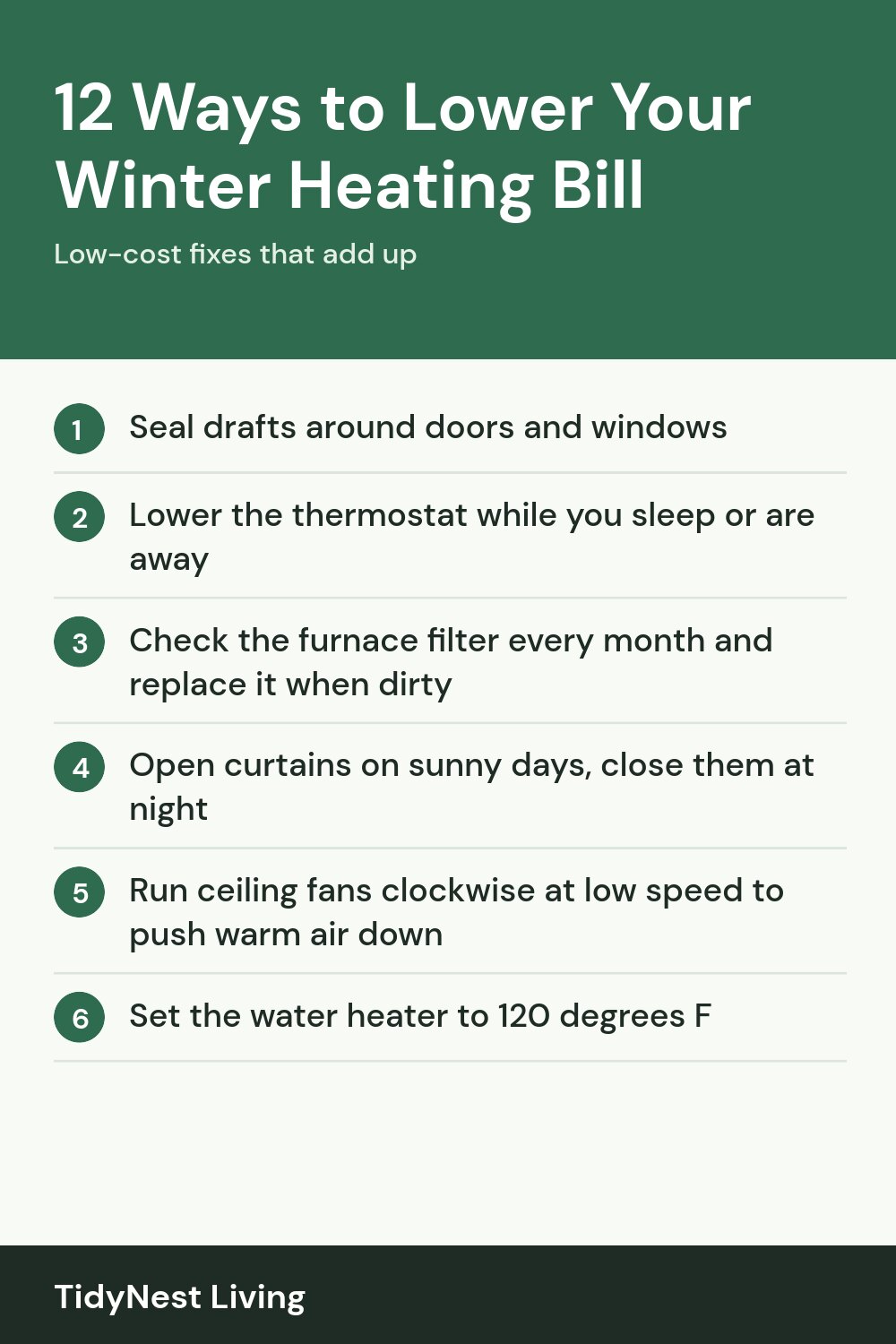
Save this checklist for later
Frequently asked questions
What is the fastest way to lower my heating bill?
Lower the thermostat when you are asleep or away and stop drafts around doors and windows. Both take little time and cost almost nothing.
Is a smart thermostat worth it?
It can be, especially if you tend to forget to adjust the temperature. The savings depend on your habits, your climate and your system, so consider it a convenience that can also trim costs.
Will closing vents in unused rooms save money?
Often not, and it can strain some systems. It is usually better to keep vents open and lower the thermostat, or ask an HVAC professional about your system.
Keep your home cozy and clean this season with our Sunday reset checklist.