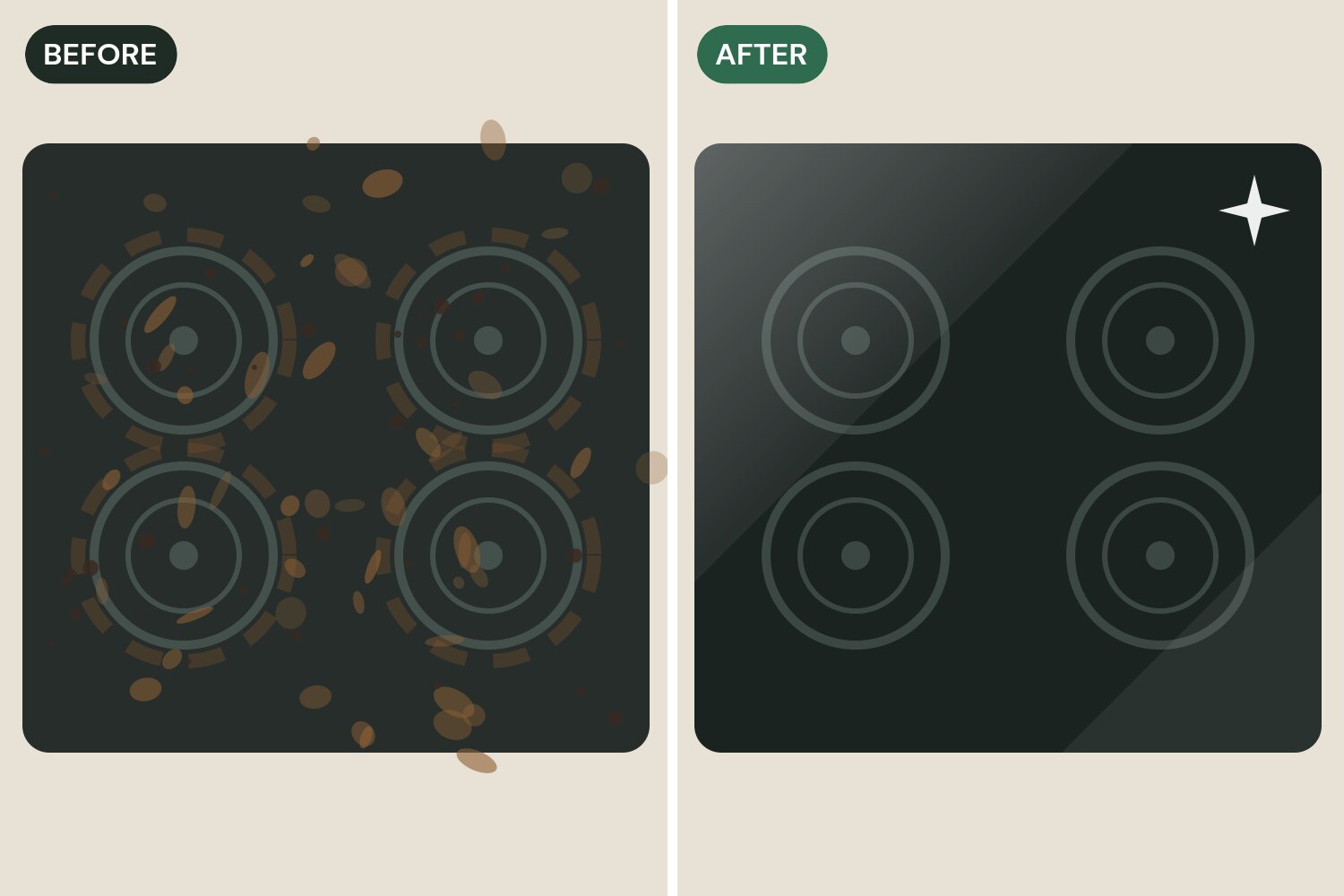
Grease on a stovetop builds up slowly, then all at once. A little splatter from last night’s dinner turns into a sticky film, and a few weeks later it has baked into hard brown spots around every burner. The good news is that you do not need harsh chemicals or an hour of scrubbing. With hot soapy water, baking soda and the right order of steps, most stovetops can be cleaned in about 15 minutes of actual work.
This guide covers gas, electric coil, glass-top and induction stoves, plus the habits that keep grease from coming back.
What you need
- Dish soap (a grease-cutting one works best)
- Hot water and a sink or large bin
- Baking soda
- A non-scratch sponge or soft scrub pad
- Two or three microfiber cloths
- A plastic scraper or old gift card for stuck-on spots
- A toothpick or soft brush for gas burner ports
- Optional: a degreasing kitchen spray or a cooktop cleaner made for glass
Check your stove type first
Cleaning rules differ by surface. Gas stoves have removable grates and burner caps. Electric coil stoves have coils that must never be soaked. Glass, ceramic and induction cooktops scratch easily, so they need soft tools only. If you are unsure, your stove’s manual will say what cleaners and tools are safe, and it is worth a quick look before you start.
Step-by-step: how to clean a greasy stovetop
Step 1: Turn it off and let it cool completely
Never clean a warm burner. Heat makes cleaners evaporate before they work and can burn your hands. Make sure every burner and knob is off, and wait until the surface is cool to the touch.
Step 2: Remove grates, burner caps and knobs, then soak
Lift off the grates and burner caps on a gas stove, and pull off the knobs if they come off easily. Fill a sink or bin with very hot water and a generous squeeze of dish soap, then let the parts soak for 15 to 20 minutes. This loosens the grease while you work on the surface. For electric coil stoves, leave the coils in place or unplug and lift them out gently, and never submerge them in water.
Step 3: Wipe away loose crumbs and debris
Use a dry cloth or a paper towel to remove crumbs, burnt bits and loose food. Doing this first stops you from smearing grease into a paste and scratching the surface with hard particles.
Step 4: Cut the grease with hot soapy water
Dip a microfiber cloth or sponge in hot soapy water, wring it out well, and wipe the whole surface. Work in small sections and rinse the cloth often so you are lifting grease away instead of spreading it around. For a heavier film, spray a kitchen degreaser, wait the time shown on the label, then wipe.
Step 5: Treat baked-on spots with a baking soda paste
Mix about three tablespoons of baking soda with one tablespoon of water to make a thick paste. Spread it on the stubborn spots and leave it for 10 to 15 minutes. Then rub gently with a non-scratch sponge. If a spot still will not move, use a plastic scraper at a low angle and repeat the paste. Patience works better than pressure.
Step 6: Scrub the grates and caps, rinse and dry
Scrub the soaked grates and burner caps with a sponge or soft brush until the grease slides off, then rinse and dry them fully. On gas stoves, any moisture left in the burner caps can cause weak or uneven flames, so give them time to dry before putting them back.
Step 7: Buff dry and reassemble
Wipe the stovetop once more with a damp cloth to remove soap and baking soda residue, then buff it dry with a clean microfiber cloth. Dry buffing is what removes streaks and leaves the surface looking shiny. Put the grates, caps and knobs back in place.
Notes for each type of stove
Gas stoves
Check the small burner ports for clogged food. Clear them gently with a toothpick or a soft brush, and avoid using metal pins that can enlarge the holes. Make sure everything is dry before you turn the burner on.
Electric coil stoves
Wipe coils with a barely damp cloth only. Lift the drip pans out and wash them in hot soapy water, or replace them if they are rusted or burnt beyond cleaning.
Glass, ceramic and induction cooktops
Use a cooktop cleaner or the baking soda paste with a soft cloth, and avoid steel wool and abrasive pads. If your manufacturer allows it, a single-edge scraper held at a shallow angle can lift burnt-on residue. Always follow the manual here, because the wrong tool can leave permanent scratches.
Mistakes that make grease harder to remove
- Cleaning while the surface is still warm.
- Using steel wool or abrasive powder on glass or coated surfaces.
- Soaking electric coils or electrical parts in water.
- Mixing cleaning products. Never combine bleach with vinegar, ammonia or other cleaners.
- Using one dirty cloth for the whole job, which just moves grease around.
- Putting burner caps back while they are still wet.
How to keep your stovetop from getting greasy again
- Wipe splatters once the stove cools after cooking. A 30-second wipe beats a 30-minute scrub.
- Use a splatter screen when frying or searing.
- Run the range hood fan while cooking and clean its filter every month or two.
- Do a quick soap-and-water wipe once a week.
- Do a full clean, including grates and caps, once a month or after heavy cooking.
Save this guide for later
Frequently asked questions
What removes baked-on grease from a stove?
Hot soapy water plus a baking soda paste handles most baked-on grease. Give the paste 10 to 15 minutes to sit before you scrub, and use a plastic scraper for anything left over.
Can I use vinegar on my stovetop?
Diluted vinegar can cut a light grease film on many glass tops, but it can dull some finishes and damage natural stone. Check your manual first, and never mix vinegar with bleach.
How often should I clean my stovetop?
Wipe it after cooking when it is cool, and do a deeper clean once a month. Regular quick wipes make the monthly job much easier.
A clean stovetop makes the whole kitchen feel fresher. If you want to keep going, try our 5-minute steam method for the microwave or this 10-minute kitchen reset.