Opening the fridge to a jumble of half-used jars, forgotten leftovers and sticky shelves is stressful, and it also wastes food and money. A good fridge reset takes about 30 to 45 minutes and makes the whole kitchen feel calmer. Here is how to clean it thoroughly and organize it so it stays that way.
What you need
- A cooler or a clear counter space for food while you clean
- Warm water and dish soap
- Baking soda
- Microfiber cloths and a non-scratch sponge
- An old toothbrush for gaskets and corners
- Clear containers, bins and a marker or labels
- A trash bag
Step-by-step: how to clean a fridge
Step 1: Empty it and check every date
Take everything out and group it on the counter. Throw away anything expired, moldy or unidentifiable. As a general guideline, the USDA says to use cooked leftovers within three to four days. Keep perishable food in a cooler if the job will take a while.
Step 2: Remove shelves and drawers
Slide out the removable shelves and drawers. Let glass shelves come to room temperature before washing them with hot water, because a sudden temperature change can crack them.
Step 3: Wash the shelves and drawers
Wash them in the sink with warm soapy water, rinse well and dry them completely before putting them back.
Step 4: Wipe the inside
Mix one tablespoon of baking soda into a quart of warm water. Wipe the walls, ceiling and floor of the fridge with this solution, which cleans and helps with odors without strong chemicals. Use the toothbrush on corners and around the drain hole if there is one.
Step 5: Clean the door and the gasket
Wipe the door shelves and the rubber seal, where grime builds up. Dry everything with a clean cloth so mildew has no chance to start.
Step 6: Wipe the outside and the handles
Clean the handles, the front and the top with a damp cloth and a little soap. Handles are touched many times a day.
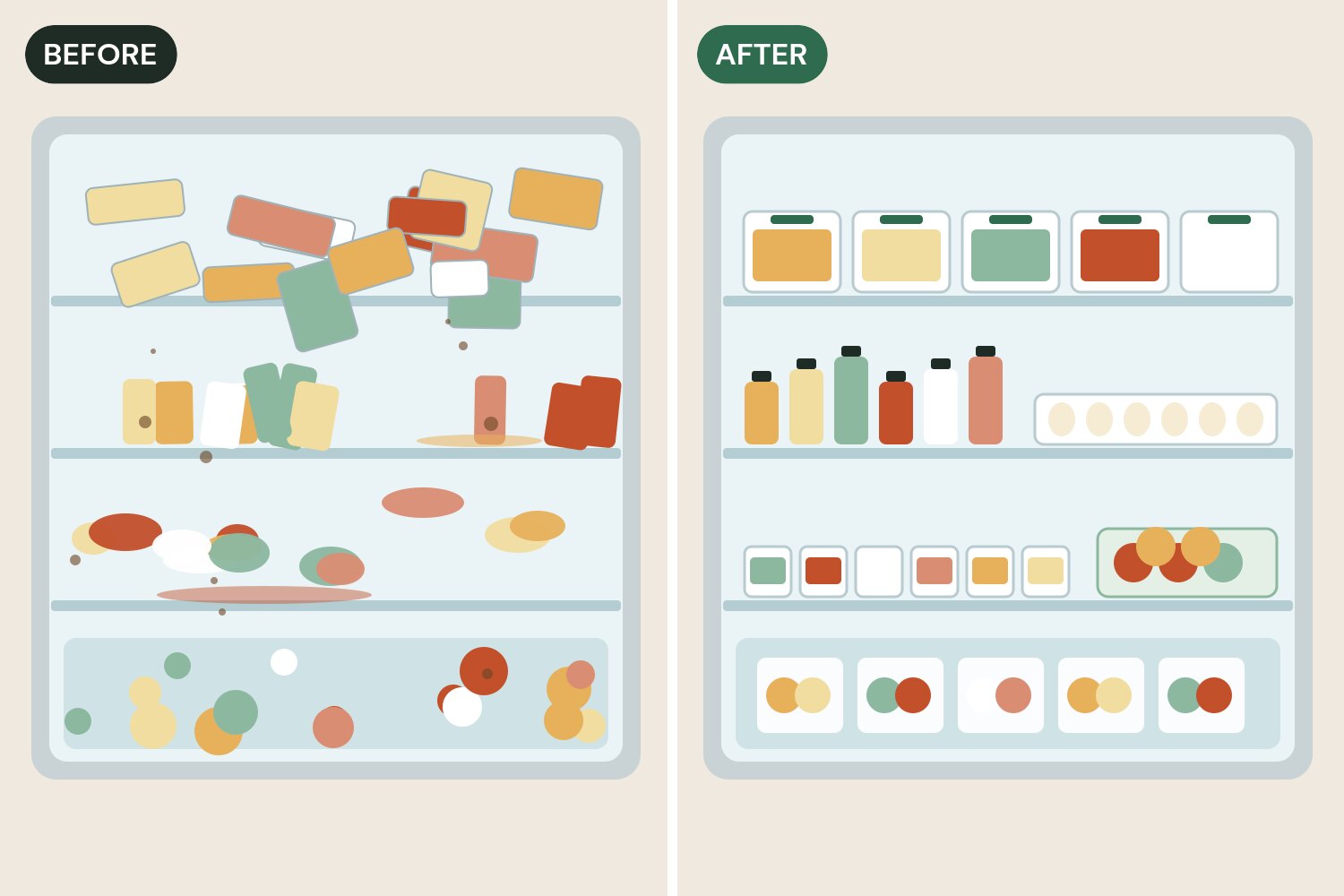
How to organize your fridge by zones
Grouping by zone makes everything easier to find and helps food stay fresh.
- Top shelf: ready-to-eat foods, leftovers, drinks and snacks.
- Middle shelf: dairy, eggs and deli items. Eggs keep best in the main body of the fridge, not the door.
- Bottom shelf: raw meat, poultry and fish in sealed containers or on a tray, so drips cannot reach other food.
- Crisper drawers: vegetables in one drawer and fruit in the other, adjusting the humidity setting if your fridge has one.
- Door: condiments, juice and items that handle small temperature swings. Avoid storing milk in the door.
Keep the fridge at 40 degrees F or below, which is the temperature recommended by food safety agencies. An inexpensive fridge thermometer is a worthwhile check.
Easy organizing ideas that really help
- Use clear containers so you can see what you have.
- Make an “eat first” bin for leftovers and items close to their date.
- Label leftovers with the date.
- Keep a small tray for sauces and condiments so you can pull them out together.
- Leave a bit of space between items so cold air can circulate.
Keep it clean: the 5-minute weekly check
- Before grocery shopping, toss anything expired.
- Wipe up spills as soon as you see them.
- Put new groceries behind older ones.
- Do a quick full wipe-down every month and a deep clean every three months.
Common mistakes
- Overpacking the fridge, which blocks airflow.
- Storing raw meat above ready-to-eat food.
- Using strong, scented cleaners that can leave odors on food.
- Putting shelves back while still wet.
Save this guide for later
Frequently asked questions
How often should I clean my fridge?
Do a quick check weekly and a deep clean every three months, or sooner after a spill.
What is the best way to remove fridge odors?
Remove the source first, wash the inside with baking soda and water, then keep an open box of baking soda on a shelf.
Is it safe to use bleach in the fridge?
It is better to stick with mild soap and baking soda, because strong chemicals can linger on surfaces that touch food.
Next up in the kitchen: our steam method for the microwave, or build a full routine with the Sunday reset checklist.