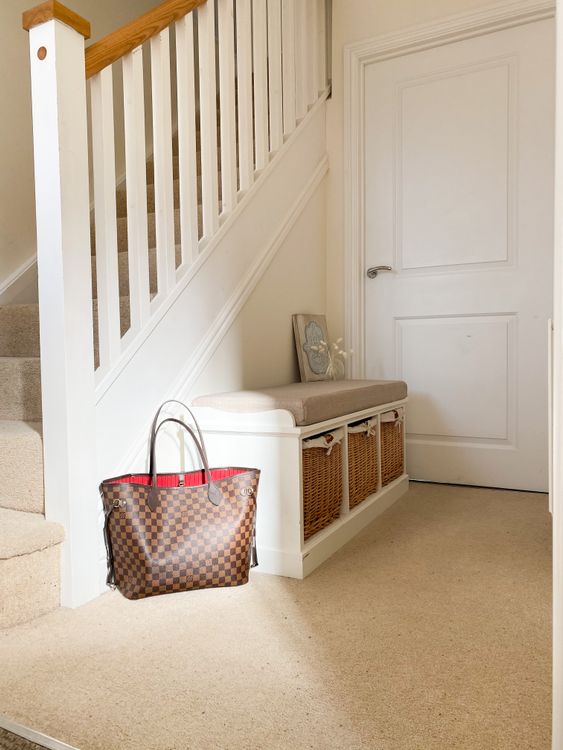
A small entryway has to handle a lot: shoes, coats, bags, keys, mail and the things everyone remembers at the last minute. The solution is not always a larger cabinet. Good small entryway organization gives each everyday item a simple landing place, then keeps the system easy to reset. Start with what your household actually brings through the door.
9 ideas for a more organized entryway
- Use wall hooks for the items worn every day. A row of sturdy hooks keeps coats and bags visible, while freeing up floor space.
- Give shoes a clear limit. Choose one shelf, tray or basket for the pairs used this week. Store off-season shoes elsewhere instead of letting them spread across the floor.
- Create a small key and wallet tray. Place it near the door, but away from the edge of a narrow shelf where items can fall.
- Assign one basket to each person when space allows. A labeled basket gives hats, gloves and small accessories a predictable home.
- Choose a bench that earns its footprint. A slim seat with baskets underneath can make shoes easier to manage without filling the entire hallway.
- Set up a mail landing zone. Keep only current mail in one shallow tray, and recycle flyers before they become a second stack.
- Use vertical space. A narrow shelf, wall rail or over-door organizer can work better than a deep piece of furniture in a tight hallway.
- Keep a return basket for items that belong in other rooms. Empty it once a day so the entryway does not become a temporary storage room.
- Rotate for the season. Keep the current coats and accessories close by, and store the rest in a labeled closet bin.
Build three simple zones
Think of the entryway as three zones: arrive, store and leave. The arrive zone is for keys and mail. The store zone is for coats and shoes. The leave zone holds the bag, umbrella or reusable shopping tote you need next. These zones can be as small as three hooks and a tray. Their purpose is to reduce the number of decisions you make while rushing out.
Keep it renter-friendly and safe
If you cannot drill into the wall, try a freestanding hook rack or removable hooks that are rated for the weight you plan to hang. Keep walkways clear and avoid placing heavy items above a seat. Check that baskets do not block doors or heating vents. Use the furniture you already own before buying new organizers.
A five-minute weekly reset
Once a week, return stray items to their rooms, wipe the tray and remove shoes that are not being worn. If the system is overflowing, the fix may be to reduce how many items live by the door, not to add another basket. Small entryways stay organized when storage matches the amount of stuff that truly belongs there.