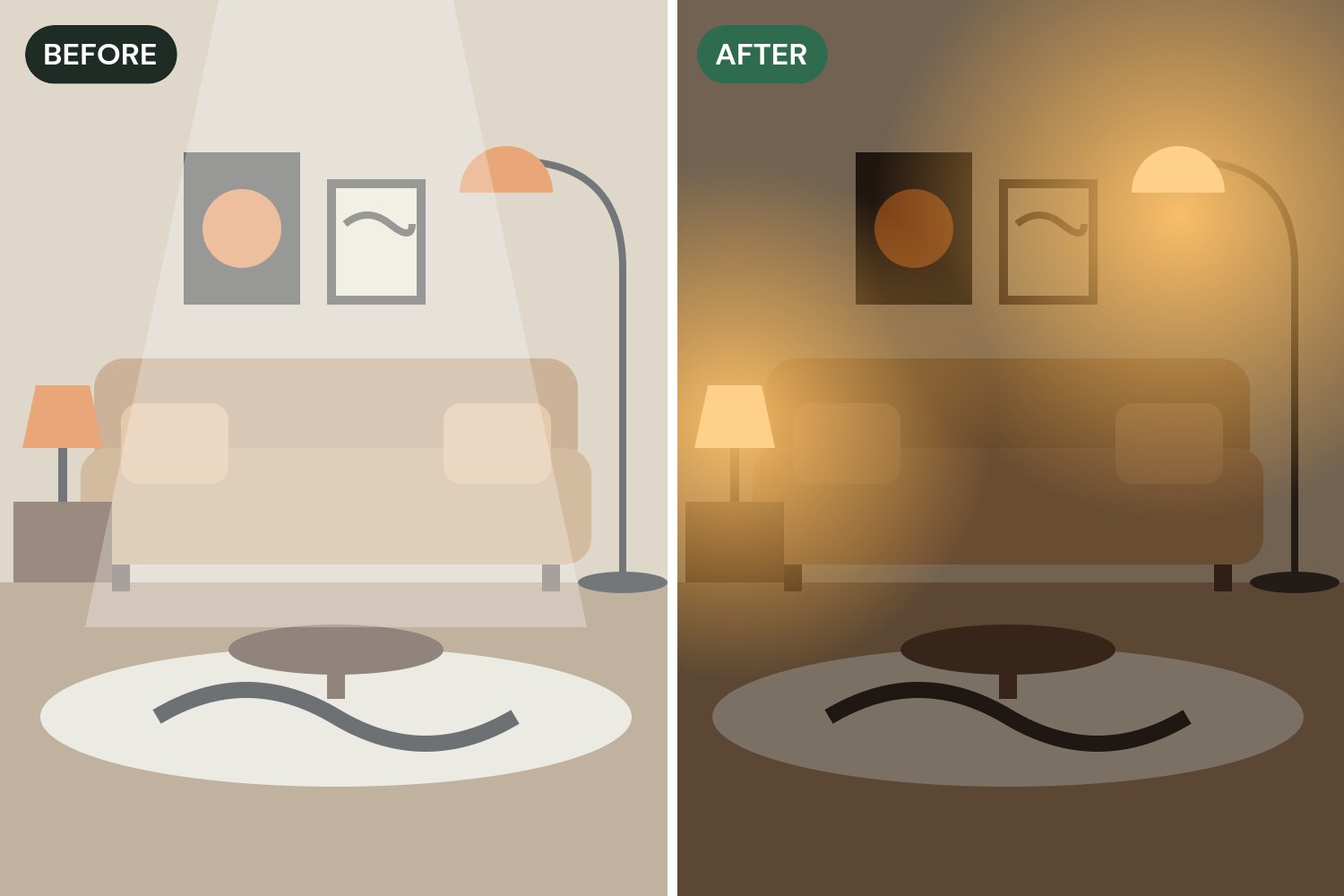
Walk into a room lit by one harsh ceiling fixture and it feels flat. Walk into a room lit by a few warm lamps and it feels like a place you want to stay. The difference is not the furniture, it is the lighting. This guide explains how to get the warm, amber lamp look popular in mid-century and moody interiors, and how to do it affordably and efficiently.
The secret: layer your light
Designers combine three kinds of light so a room has depth.
- Ambient light: the general glow of the room, from floor lamps or a dimmed ceiling light.
- Task light: focused light for reading, cooking or working, such as a reading lamp.
- Accent light: small pools of light that highlight art, shelves or plants.
For a cozy look, turn off the overhead light in the evening and rely on at least three lamps at different heights.
Choose the right bulbs
Color temperature
Warm light sits between about 2200K and 2700K. The lower the number, the more amber the glow. Pick the same Kelvin number for every bulb in the room, because mixing temperatures makes a space feel uneven.
Brightness
Brightness is measured in lumens, not watts. As a rough guide, about 450 lumens equals an old 40-watt bulb and about 800 lumens equals a 60-watt bulb. For cozy lamps, 400 to 800 lumens is plenty, and a dimmer lets you go lower.
LED efficiency
The U.S. Department of Energy says ENERGY STAR certified LEDs use at least 75% less energy than incandescent bulbs, so a warm look no longer means a high bill.
The orange lamp look: what to buy
- An arc floor lamp over the sofa, which works as ambient light and a style statement.
- A globe or mushroom table lamp for a side table or shelf.
- A lamp with an amber, orange or linen shade, which tints the glow warm.
- A small accent lamp for a corner, near a plant or on a bookshelf.
Placement: build a light triangle
Place lamps so light comes from three points around the seating area, for example a floor lamp behind the sofa, a table lamp on one side and a small lamp in the opposite corner. This evens out shadows and makes the room feel balanced.
Add control with dimmers and smart bulbs
- Use dimmable LED bulbs with a compatible dimmer, since some older dimmers flicker with LEDs.
- Try smart bulbs that let you change color temperature and brightness from an app, then create an “evening” scene at about 2200K and 30% brightness.
- Put non-smart lamps on smart plugs so they turn on together at sunset.
Layer in warm textures
Light looks richer on soft, textured surfaces. Add a wool rug, a velvet or boucle cushion, a throw blanket in rust or terracotta, and warm wood. Dark walls absorb light and feel moody, while lighter walls bounce it around, so choose based on the atmosphere you want.
A simple under-$100 plan
- Replace every bulb in the room with matching 2700K LEDs.
- Add one warm-shaded table lamp or a plug-in accent lamp.
- Put lamps on a smart plug or a simple timer.
- Buy a dimmer switch or dimmable bulbs for the main lamp.
- Remove the ceiling bulb from use in the evening.
Safety notes
- Never exceed the maximum wattage printed on the lamp socket.
- Keep bulbs away from fabric and paper shades unless the lamp is designed for them.
- Keep cords out of walkways and do not run them under rugs.
- Make sure tall lamps have a stable base, especially around children and pets.
Common mistakes
- Mixing warm and cool bulbs in the same room.
- Putting all lamps at the same height.
- Using only the ceiling light.
- Choosing very dim bulbs and then struggling to read.
Save this guide for later
Frequently asked questions
What color light makes a room feel cozy?
Warm white light between about 2200K and 2700K feels the most cozy and relaxing for living rooms and bedrooms.
How many lamps does a living room need?
Three or more at different heights is a good rule, which creates the layered look.
Are warm lamps more expensive to run?
Not with LED bulbs. Color temperature does not change how much energy an LED uses.
Next, add a glowing focal point with LED shelf lighting, or build a cozy reading nook.